Writer, Director & Production Designer
Khaliq-e-Khalq is a philosophical theatre piece exploring the struggle between mankind and God, embodied in the journey of a man consumed by ego and a growing God complex. Both hero and villain of his story, he isolates himself from family and morality, believing he holds divine power—only to be destroyed by that very arrogance.
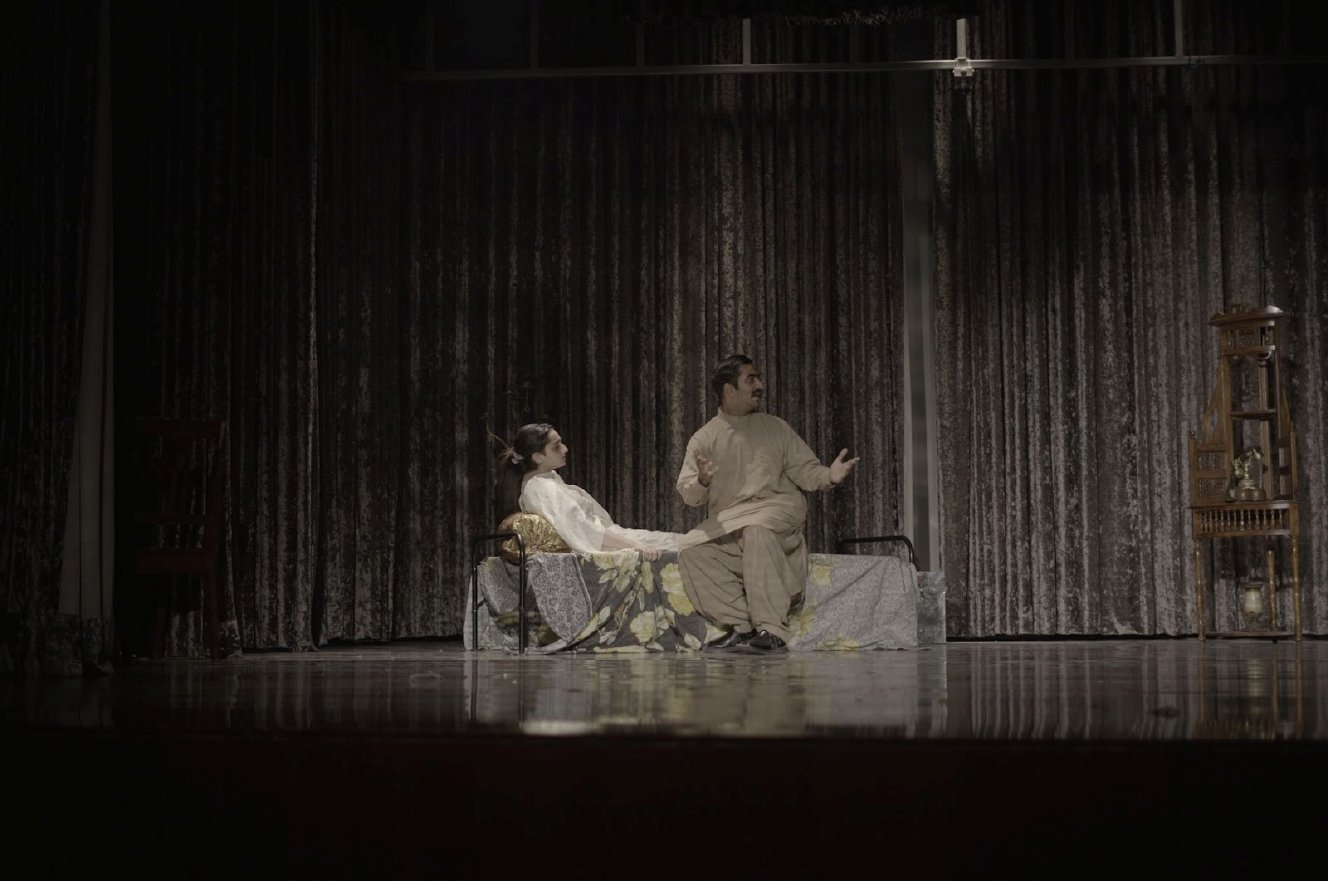
The play unfolds across multiple eras, including pre- and post-partition India. Shifts in furniture, lighting, telecommunication, and set elements marked the passage of time, while evolving language and technology deepened the historical layers.
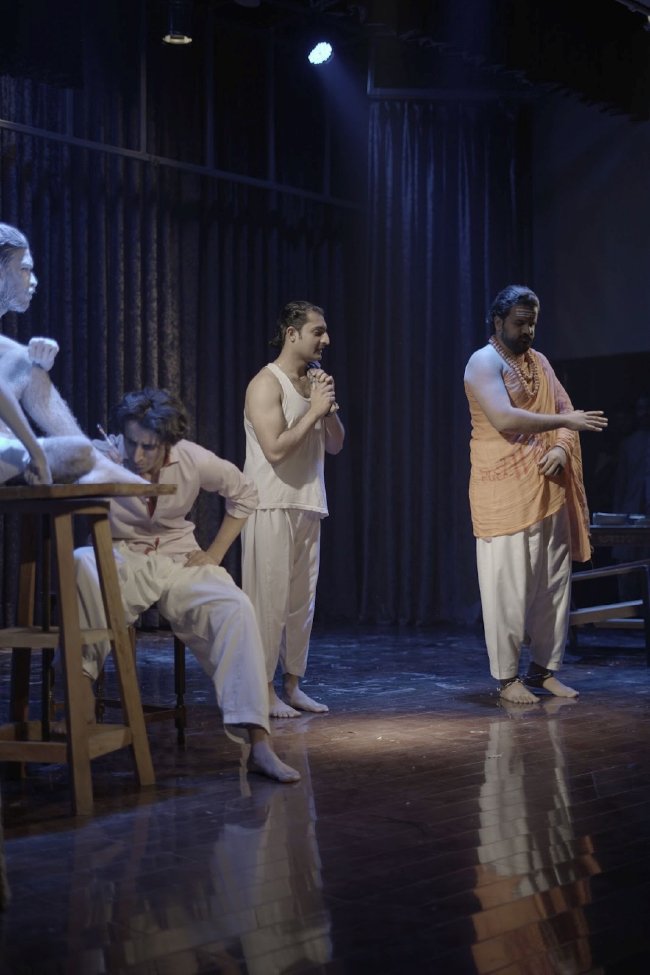
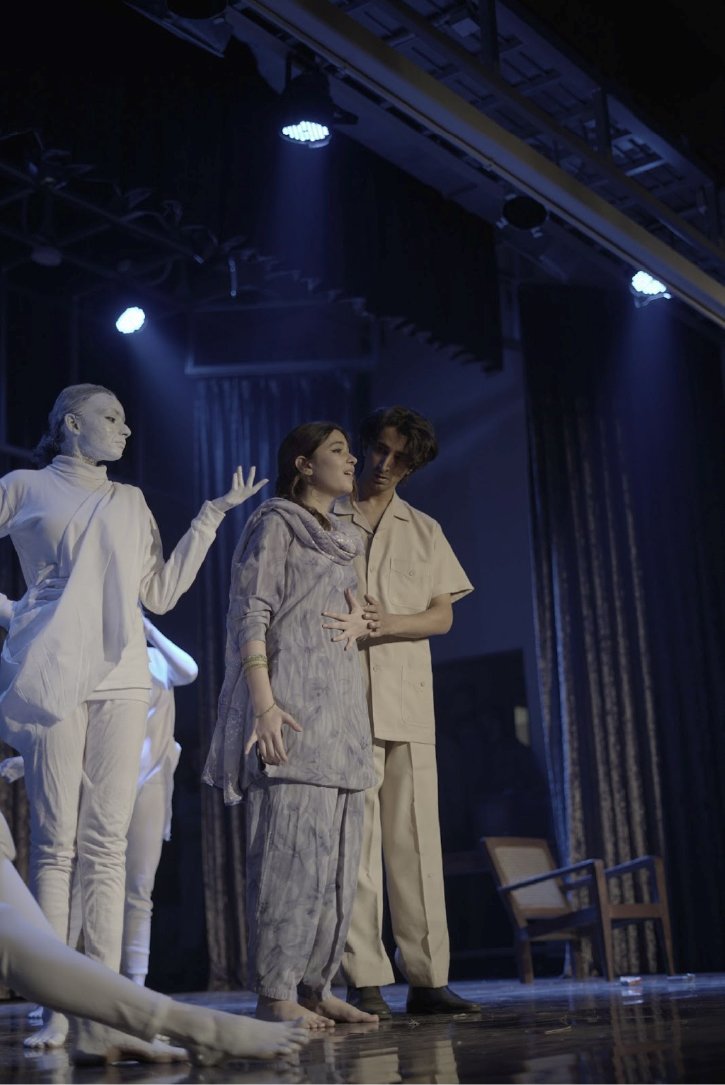
One of the most powerful motifs was the use of human sculptures and statues—silent witnesses to the protagonist’s descent. In the climax, after he poisons his own son, these sculptures come to life through mime and dance, blurring the line between metaphor and reality. Were they manifestations of guilt and delusion, or creations of his own hubris that ultimately consumed him?
Through the integration of performance, spatial storytelling, and symbolic design, Khaliq-e-Khalq explored religious diversity, generational conflict, and the haunting consequences of unchecked ego. As writer, director, and production designer, I shaped a theatrical experience where staging and narrative worked in unison to depict a man’s descent into godhood—and his inevitable fall.